
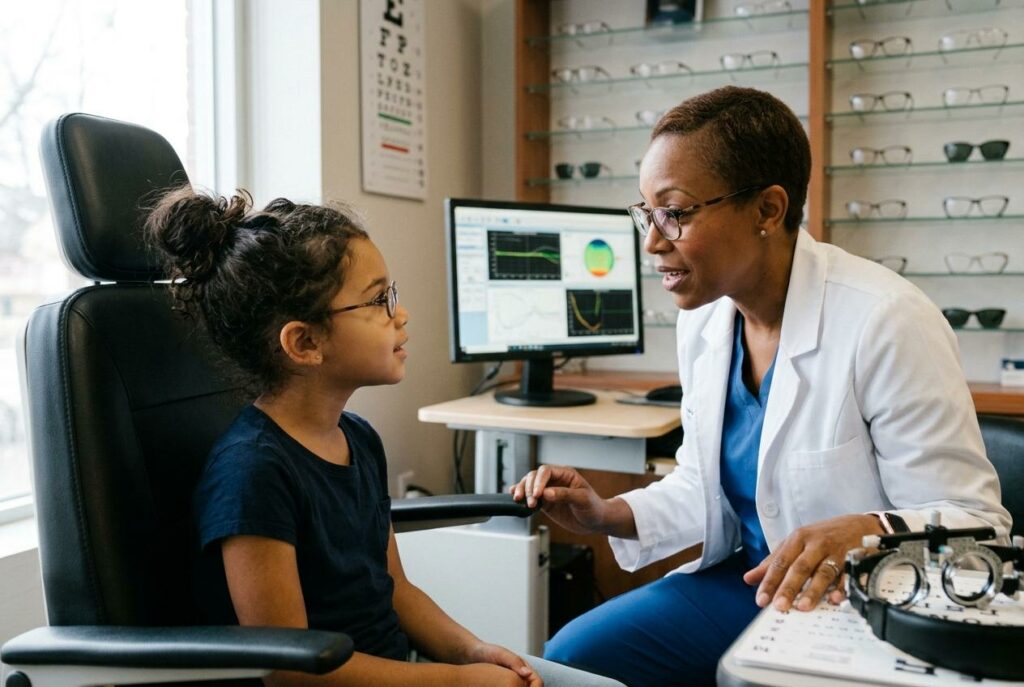
Maybe your child has been squinting at the board at school, or maybe they’re sitting very close to the TV. If this sounds familiar, you may already be wondering if their vision is changing and what you can do about it. At Oxford Optometry, our team knows that a common question is if myopia can be reversed, and we’re here to help you understand what is going on and what can be done for your child’s vision.
Myopia cannot be reversed, but it can be managed, and starting early makes a real difference for your child’s long-term eye health. If you’ve been noticing signs of nearsightedness in your child, scheduling a children’s eye exam is a great place to start. There are myopia management options available to slow the progression and protect their long-term eye health.
What Myopia Actually Does to the Eyes
Myopia, or nearsightedness, happens when the eye grows slightly too long from front to back. That extra length changes where light lands inside the eye, causing distant objects to look blurry while things up close stay clear. Those changes are structural, so once they happen, there’s no taking them back, sort of like growing taller.
That’s why noticing the signs early matters so much. The sooner a child gets assessed, the sooner a plan can be put in place to protect their vision going forward.
Signs Your Child Might Be Nearsighted
Kids don’t always notice that their vision is blurry. Often, their behaviour tells the story first. You know your child better than anyone, so try to keep an eye out for these common signs:
- Squinting at screens, whiteboards, or anything in the distance
- Complaints of tired, strained eyes, especially after distance viewing
- Sitting unusually close to a screen or TV
If you’re noticing any of these, it’s a good idea to book a thorough eye exam sooner rather than later.
Can Myopia Be Reversed?
There’s no proven method to reverse myopia once it develops because the physical changes to the eye’s shape are permanent. However, that’s not the full picture. Research shows that the progression of myopia can be slowed, which can have a big impact on your child’s future eye health.
What About Laser Eye Surgery?
Laser surgery corrects how clearly a person sees, but it doesn’t change the physical length of the eye. For children, surgery isn’t an option because their eyes are still growing. Even for adults, it’s a vision correction tool, not a reversal of myopia itself. Our team at Oxford Optometry can walk you through laser eye surgery co-management options if that’s something you’re exploring for the future.
Can Myopia Go Back to Normal on Its Own?
True myopia doesn’t self-correct as a child gets older. Once the eye has grown too long, it stays that way. Some children experience temporary issues with focus that can improve with the right care, but that’s different from myopia. If your child has been diagnosed with nearsightedness, their prescription isn’t going to correct itself with time.
Why Slowing Myopia Matters for Long-Term Eye Health
Here’s where the conversation gets hopeful. Even though myopia can’t be reversed, slowing its progression is genuinely valuable. A child whose myopia is managed well may end up with a much lower prescription as an adult compared to one who had no intervention at all.
Higher levels of myopia are also linked to a greater risk of certain eye conditions later in life. High myopia increases the risk of serious complications including retinal detachment and glaucoma, so keeping the prescription lower over time helps protect the eye in the long run. The childhood years are a narrow and important window, so earlier action gives you more to work with.
At What Age Does Myopia Stop Progressing?
Myopia often stabilizes in the late teens or early twenties when the eye finishes growing. However, the years between childhood and that stabilization point are where it tends to change the fastest. Acting during those years, rather than waiting it out, gives your child a better chance of a lower prescription over their lifetime.
Myopia Management Options Worth Knowing About
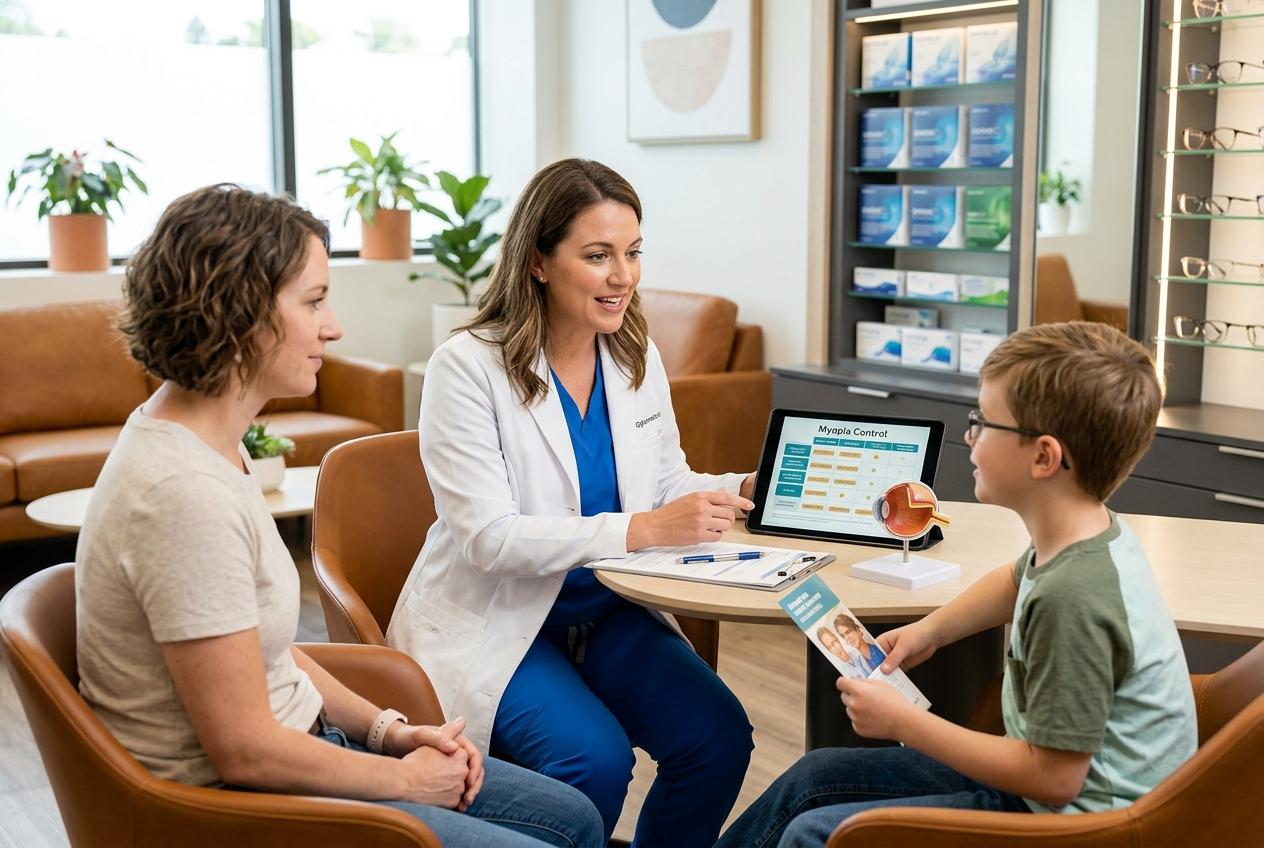
There are several approaches an optometrist may recommend depending on your child’s age, prescription, and lifestyle. These aren’t 1-size-fits-all solutions, but each option targets how the eye grows. Options can include:
- Orthokeratology lenses, worn overnight to gently reshape the outer layer of the eye for clear daytime vision without glasses or contacts.
- Specialty soft contact lenses designed to alter how light focuses on the retina in a way that may help slow eye growth.
Myopia-Control Glasses for Younger Kids
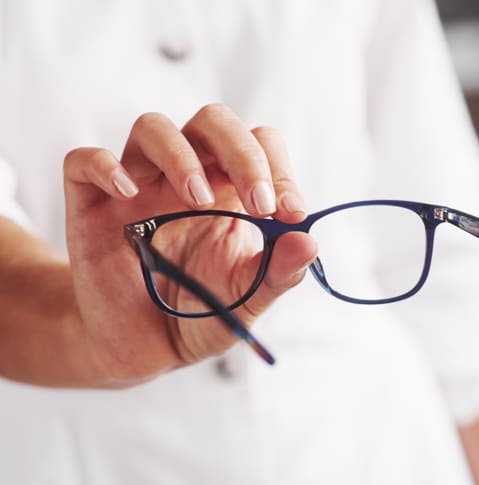
For children who aren’t ready for contact lenses, specialty glasses are a practical option. They look just like regular glasses, and they correct your child’s vision while also slowing how quickly their myopia progresses.
Simple Lifestyle Habits That Support Eye Health
Alongside clinical options, everyday habits play a supporting role. Research shows that time spent outdoors supports healthy eye development in children. We often recommend spending between 1–2 hours outside each day.
Screen breaks also help. Encouraging your child to look at something in the distance every 20 minutes or so gives their eyes a chance to rest and refocus.
The Value of Regular Eye Exams for Your Child
One of the most practical things you can do as a parent is keep up with regular eye exams for your child. Prescriptions can shift quickly during the growing years, and early detection opens up more options.
At Oxford Optometry, we use Topcon MYAH technology to monitor myopia progression and recommend treatment options tailored to your child.
What to Expect at a Children’s Eye Exam
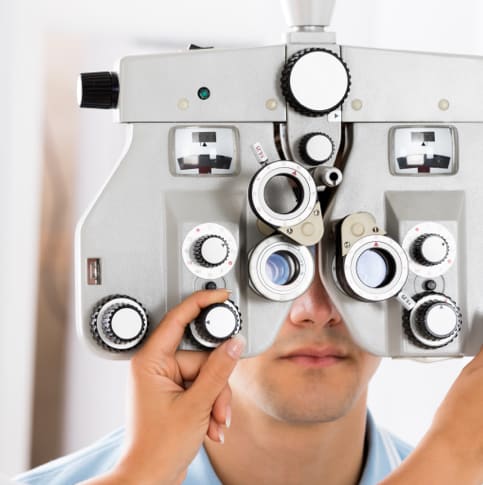
A comprehensive children’s eye exam goes beyond just reading a chart. The eye doctor checks your child’s prescription, the overall health of their eyes, and how both eyes are working together. The exam can also pick up on early risk factors before your child notices any symptoms themselves, which is exactly the kind of early awareness that leads to positive outcomes.
Book Your Family’s Eye Exams
At Oxford Optometry in Woodstock, Ontario, our team takes the time to assess each child thoroughly and talk through what the results actually mean for your family. As a Myopia Management Clinic, we offer dedicated support for children with progressing nearsightedness, including personalized treatment options designed to help manage myopia over time. If you’re curious about myopia management or want to get your child’s eyes assessed, we encourage you to book an appointment today.