
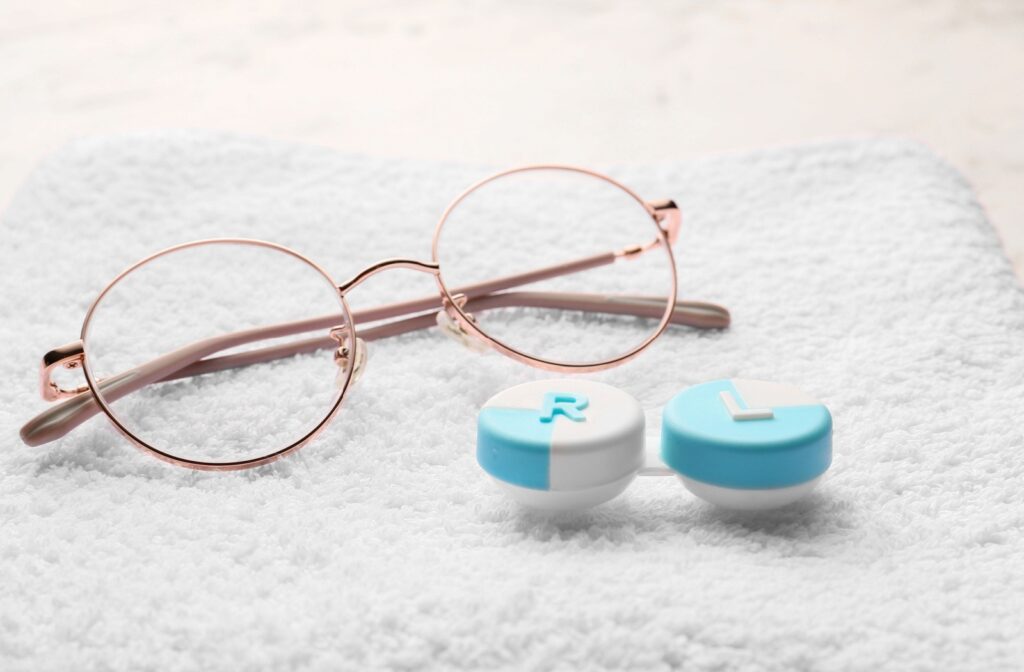
You might think your glasses prescription can work for contact lenses, too. After all, they both help you see clearly, so the numbers should be the same, right? At Oxford Optometry, we want our patients to understand that these prescriptions are designed differently.
Contact lens prescriptions are different from glasses prescriptions. This is because contact lenses sit directly on your eye, while glasses sit about 12 millimetres away. We provide contact lens exams and fittings so you can see clearly, no matter which kind of vision correction you choose.
Why Your Contact Lens and Glasses Prescriptions Are Different
The position of your vision correction makes a big difference. Contacts sit directly on your eyes, which creates a single optical system. Because glasses sit a little further away from your eye, they create a separate optical system that must account for the distance between the lens and your eye. This gap affects how your prescription needs to be calculated.
Because of this difference in position, your eye doctor must adjust the prescription strength. Higher prescriptions often require more significant adjustments between glasses and contacts.
The Difference Between Your Glasses and Contact Lens Prescription
Each prescription contains different measurements because they serve different purposes.
Glasses Prescription Components
When you get a prescription for glasses, you’ll notice a few key numbers, which address different eye concerns. Your glasses prescription can include:
- Sphere (SPH): Corrects nearsightedness or farsightedness
- Cylinder (CYL) and axis: Addresses astigmatism
- Add power: For reading or multifocal lenses
Contact Lens Prescription Components
With a contact lens prescription, there are more measurements because the contact lens will be sitting directly on your eye. The contact prescription can include:
- Base curve and diameter: Helps with a proper fit on your eye
- Brand and lens material: Different materials fit differently
- Power: Adjusted for direct contact with your eye
- Cylinder and axis: For toric lenses that correct astigmatism

Can You Convert Your Glasses Prescription to Contacts?
It’s not a good idea to convert a glasses prescription to contact lenses on your own. Your optometrist in Woodstock can perform a separate contact lens fitting to determine the right prescription.
For lower prescriptions (typically between +4.00 and -4.00), the numbers might look similar. However, your eye doctor still needs to help the lenses fit your eyes properly and safely. It’s also a good idea to get professional guidance on proper contact lens care.
Even when prescriptions appear close, the base curve and diameter measurements are unique to contact lenses. These measurements can only be determined through a professional fitting.
Why You Need a Contact Lens Fitting and Eye Exam
Your eye doctor in Woodstock can measure how contact lenses fit on your specific eye shape. Each person’s eyes have unique curves and characteristics that affect lens fit.
The shape of your eye can change over time due to age, health conditions, or other factors. This is why regular contact lens exams, even when your vision seems stable, are important.
What Happens During Your Contact Lens Fitting
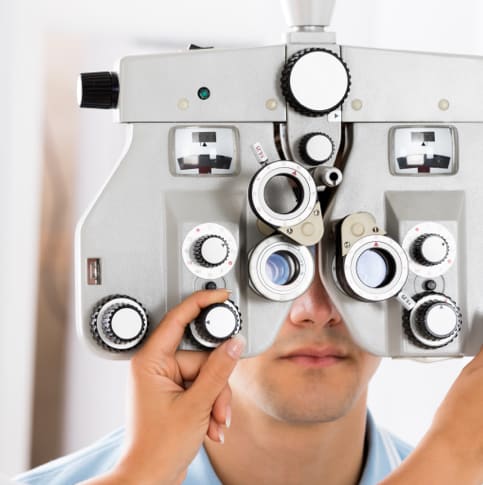
During your contact lens fitting, a member of our eye care team may:
- Measure your eye’s curvature
- Assess your tear film quality
- Teach you how to insert, remove and care for your lenses
- Schedule a follow-up appointment to help with fit and comfort
Regulations and Contact Lens Prescriptions
The College of Optometrists in Ontario sets standards that require regular assessments before renewing contact lens prescriptions. This regulation exists to protect your eye health.
This means that when your contact lens prescription expires, your eye doctor needs to see you before issuing a new one. Your eyes change over time, and contact lenses need to be refitted to match these changes.
Schedule Your Contact Lens Fitting
Ready to get properly fitted for contact lenses? Our team at Oxford Optometry uses innovative technology to help your contacts fit safely and comfortably. Book your consultation today to experience the difference that personalized, professional eye care can make for your family.